
Burning Trees and Dropping Bombs
A look at the various ways RPGs attempt to navigate morality

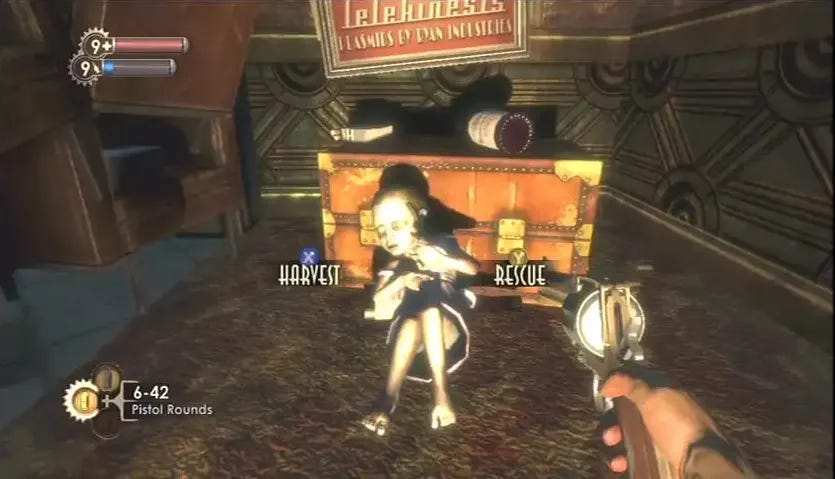
RPGs have always had an unsteady relationship with the concept of “choice”. I don’t just mean in equipment or character builds, but in actual moral choices the player can make. Whether this is within dubious “good or evil” systems like Fallout 3 and Fallout: New Vegas’ “karma” system, or Bioshock’s endings being determined by whether or not the player saves the “little sisters” or harvests them for their ADAM slugs.
One of the main ways these systems fall apart is when they’re directly tied to in-game rewards. An important element of moral choices in RPGs is to attempt to divorce, or at least make less obvious, the choices from their immediate benefits. Without this, it stops being an element of player character’s morality and instead becomes (for many players at least) the simple question of: “which options gives me the best stuff?” Unless, of course, you tie the morality directly to the reward, i.e. making morality dubious decisions always result in the player receiving a greater reward, but having a negative effect on some other gameplay element. Even then, it can often fall apart when “balancing” the different rewards to be “fair”, making the choices become fairly arbitrary. Even RPGs that are otherwise great at understanding the importance of discussions of the morality in different choices occasionally fumble this concept, especially when it comes to rewarding a player being “good” or punishing them for being “evil”— or vice versa.
An example are the previously mentioned “little sisters” in Bioshock. While at first their fate seems like an interesting dynamic between being rewarded with ADAM, the game’s ability upgrade material by “harvesting” them, or missing out on this reward by having mercy and “rescuing” them. The game also very effectively makes it clear that having mercy will be important in the story later on. However, it turns out you get a different and more interesting reward for sparing the children— that also comes with plenty of ADAM, almost as much as you get from the “evil” option. So then, what’s the point of harvesting them? Just for the sake of being evil and getting the evil ending? There’s no engagement with the player’s desire of reward versus their desire to make the “right” choices. Likely, this is done just so there’s no sense of it being “unfair” that the “good” choice doesn’t give the player a similar level of reward. In the end however, it just makes players gravitate towards choosing solely based on the ending they want— not any sense of morality or investment in the choice.
An example of properly engaging with a player’s personal morality is Fallout 3’s quest “Oasis”. The quest revolves around a unique ghoul who is half-melded with a parasitic tree that grew from his head, which he calls “Bob”. Harold now finds himself stuck in place as a sort of grotesque mutated living tree, and is now worshipped by a group of post-apocalyptic druids that see him as a kind of nature deity. This is because an “Oasis” of trees have sprouted up around Harold, creating a patch of green in the endless brown and black of the desiccated wasteland. Harold asks the player to kill him, as he’s grown tired of his life (ghouls have unnaturally long life spans), especially now that he’s quite literally rooted in one place. Meanwhile, both factions of the druids don’t want you to kill Harold, with one group wanting to accelerate his growth to help spread trees throughout the wasteland, while the other wants to slow his growth so they can keep his “blessing” to themselves and protect him from outsiders.
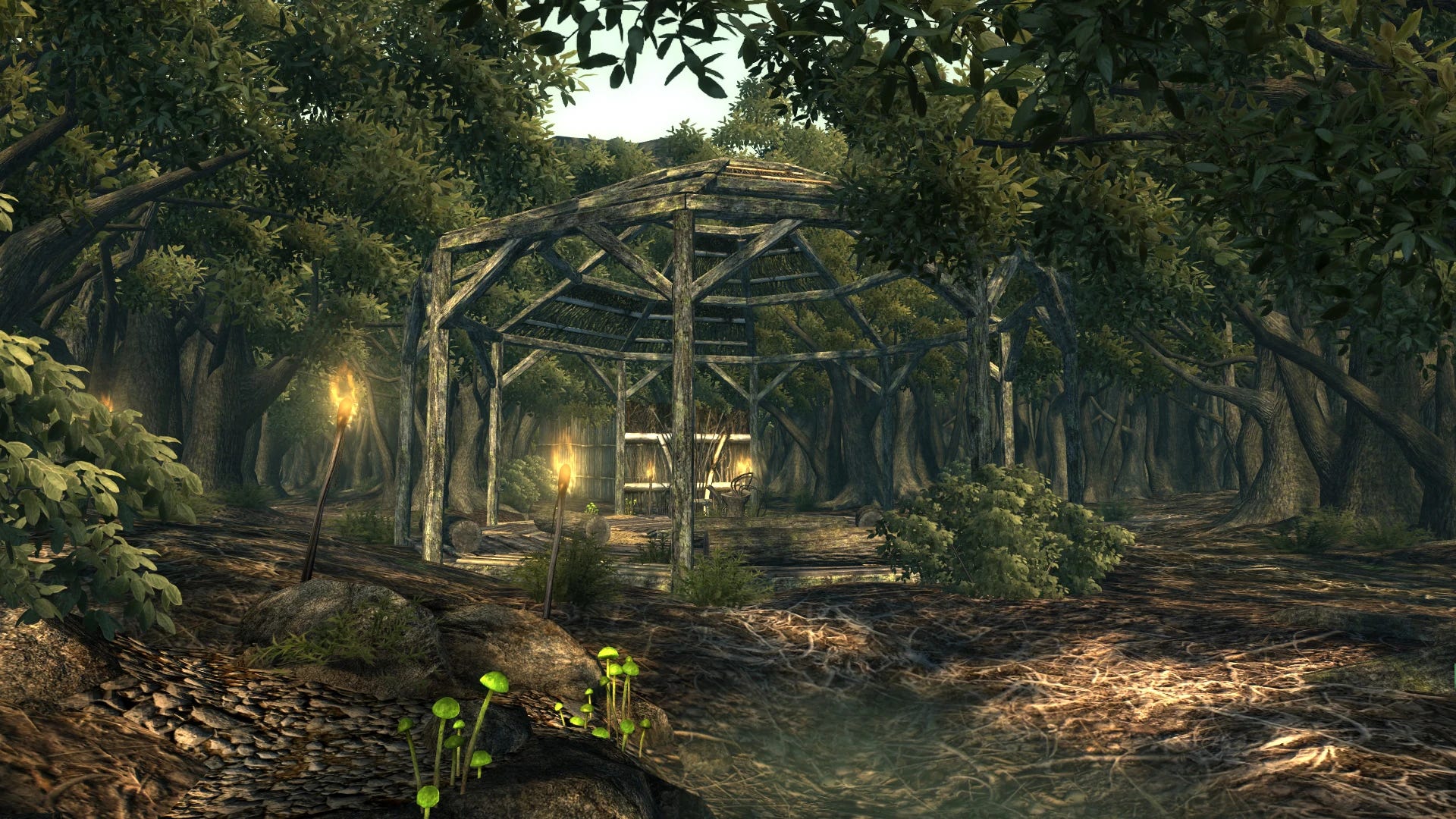
This trio of options all come with their own rewards, and the game does a great job of making it seem like there’s more than one “right” choice. However… there is a fourth option. An option that has no reward outside simply being something that’s so pointlessly evil that it shows up in the ending slideshow of the game if you do it (as long as you haven’t done something “more evil” like nuked Megaton or wiped out Rivet City).
During your conversation with Harold about killing him, he explains that his “heart” lies deep in the cave system under the Oasis and that’s what the player has to destroy (or apply one of the druids’ concoctions to in order to speed/slow his growth). The player can suggest, in a classic evil dialogue option, that simply setting him on fire would be much easier than trying to get to his heart. Harold is horrified at the comment, and insists the player kill him by destroying his heart, clearly terrified at the mere mention of fire.
There’s no dialogue or interactive option on “Bob” that directly lets you choose to set Harold on fire, but the conversation surely makes an evil character wonder... what happens if you just attack him with a fire weapon? If a player is a character without any basic moral compass, or is particularly sadistic, they can find out.
“Oasis” is a great example of creating a quest without the traditional binary of a “good” and “evil” choice. Obviously it’s evil to set Harold on fire, but is it good to grant his wish for death by destroying his heart? Or does the player have a moral imperative to accelerate his growth so that trees can spread through the currently barren wasteland— even if that means forcing Harold to stay alive against his will? It’s a quest that does a great job making the player engage with the characters in order to figure out what decision they feel their character would make.
However, Fallout 3 obviously isn’t free from bungled moral choices either.
One of the first choices in Fallout 3 you face after leaving Vault 101, is whether or not to help Mr. Burke wipe Megaton off the map. “The Power of the Atom” is a quest that runs into a problem that I often find in RPGs with “big” choices, the kind of choices that have an enormous effect on what the player’s experience will be like after the quest is complete.
In this case, blowing up Megaton has one obvious downside: no more Megaton.
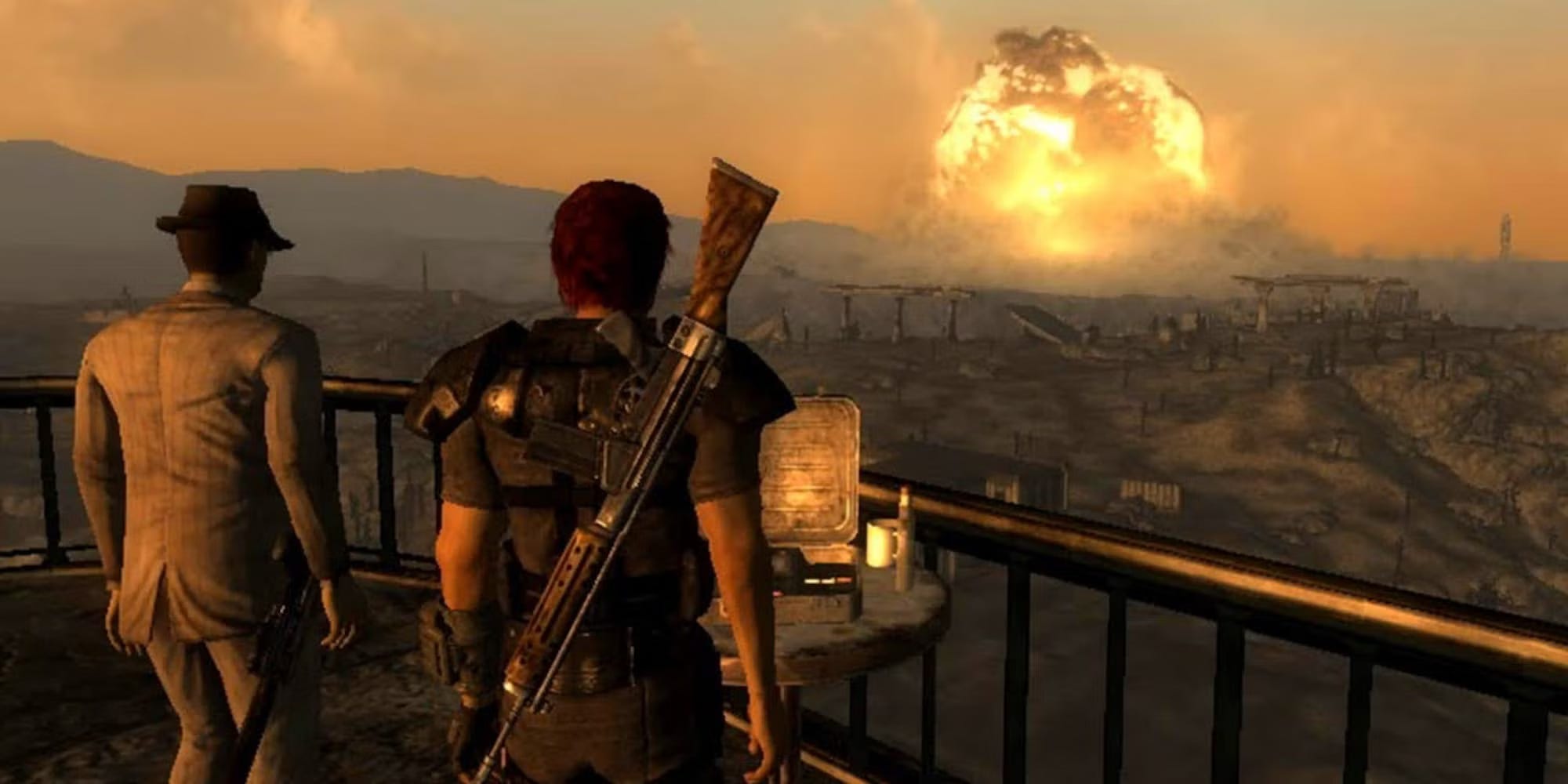
I know that’s stating the obvious, but it’s important to talk about the actual gameplay implications of such a major event. Megaton is full of NPCs, quests, items— all of which are instantly removed from the player’s access permanently (minus one shopkeeper and their associated quest) after nuking Megaton. This gives one major disadvantage to this particular choice. Arguably, one that isn’t outweighed by the reward of an apartment in Tenpenny Towers— especially because you get a house in Megaton instead if you disarm the nuke.
I’m a big fan of decision like this, in the sense that I love large permanent changes in RPGs based on player decisions. However, the average player is often dissuaded by the impact of any permanent loss of something. Once they realize this, there’s a very real possibility they’ll just reload their old save before they locked into destroying Megaton. I’d say any decision that has a high odds of players regretting it and not committing is an example of a poorly executed one.
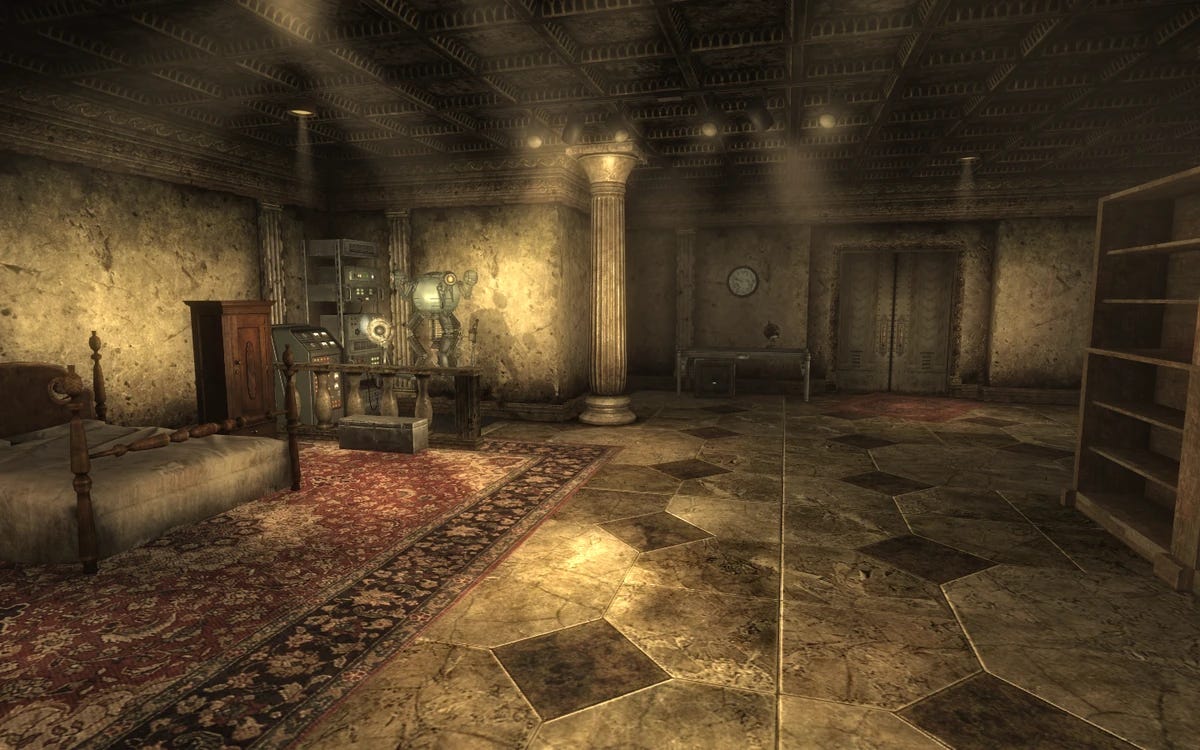
This isn’t something that’s impossible to solve without a very minor change either. All that would have to change is to lock out access to Tenpenny Tower, and its own associated NPCs, quests, and items— until the player nukes Megaton. Then it would essentially be a “fair” exchange that players would be more interested in making, beyond just being evil for the sake of it like with the little sisters in Bioshock.
The whole “being evil for the sake of evil” idea is a common pitfall in RPGs. This isn’t entirely out of poor design, it’s just often the natural result with making a faction hostile by deciding to ally with the “bad guys”.
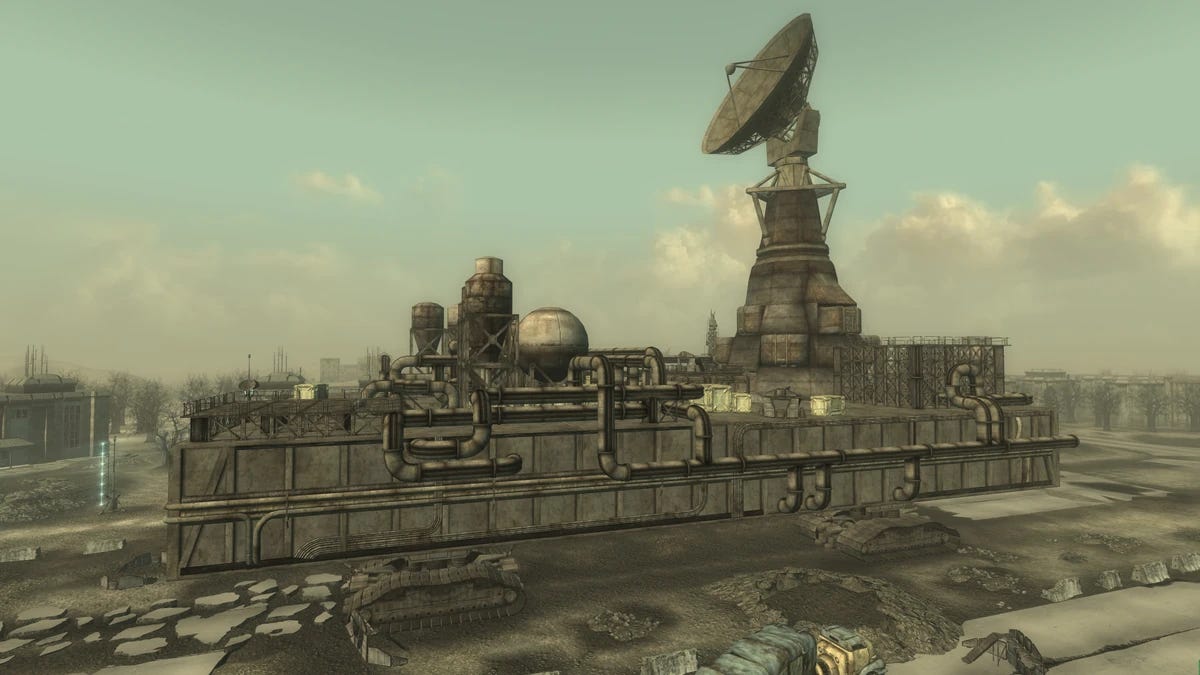
Fallout: New Vegas’ faction reputation system allows for there to be some wiggle room in how you handle certain groups becoming hostile, with at least a few groups being violently aggressive against the player being the typical result of most playthroughs. Fallout 3 on the other hand, lets you nuke The Citadel instead of the Enclave’s base in the Broken Steel DLC, making all of Brotherhood of Steel hostile against the player, in exchange for nothing but some items you can scavenge from the ruins that you can’t normally get.
However, as I discussed with the “little sisters” in Bioshock, having one-to-one rewards is a similar pitfall, so it’s a delicate balancing act between reward and consequence. You can’t let the difference be purely arbitrary, otherwise it’s little more than getting the same reward in a different shade— getting the red prize instead of the blue prize or the green prize.
I mentioned New Vegas’ faction reputation system, which is a good example of how to negotiate moral choices by having the different choices influence how potential allies or enemies feel about you. However, systems like this can sometimes end up scaring them away from certain factions that don’t play well with others, which most “evil” factions tend to be. However, letting players befriend all factions simultaneously results in a much poorer experience where there’s no real reason to make any choices that may anger a faction and risk losing access to their benefits.
One thing I always appreciated about Fallout: New Vegas’ endings, is that the karma system influences the narration about your character for each faction’s ending.
This is the evil karma Mr. House ending narration about your character:
“The Courier, cruel and merciless, had ensured that Mr. House would maintain complete control over New Vegas and everyone in it. Mr. House afforded him/her every luxury at his disposal in the Lucky 38, partly out of gratitude, and partly out of fear.”
Compare that to the good karma narration:
“The Courier, fair and kind-hearted to those in the Wasteland, ensured that Mr. House would keep New Vegas stable and secure for future generations. Mr. House afforded him/her every luxury at his disposal in the Lucky 38, out of gratitude - and a quiet sense of pride for his choice in lieutenants.”
Fallout 4’s factions function in a much simpler and less engaging way compared to New Vegas’ version. When it comes to the main factions, there’s basically just the “good guys” and the Institute, “the bad guys”. The Brotherhood of Steel, Minutemen, and Railroad main questlines all end in the same way: deciding to blow up the Institute.

This simplistic division between sides makes it feel rather redundant to play through the game again and choose a different good faction to side with. Not to mention, it feels morally dubious to have the good endings all culminate in a nuclear explosion of a settlement— something that seems at odds with the messaging of Fallout altogether, and doesn’t sit well against something like the previous discussed Megaton choice in Fallout 3.
Even though New Vegas has something similar, that being a confrontation with Legate Lanius on the NCR, Mr. House, and Wild Card main questlines— it still affords the player a choice in how to confront Lanius, with even a very high level Speech or Barter check allowing the player to avoid the fight even without being friendly with the Legion.
There’s no way to finish Fallout 4’s main quest without nuking the Institute, unless you side with the Institute.
This is something that is so baffling to be spun as a “good” action, that it’s literally pointed out in a line of dialogue in Fallout 4’s Far Harbor DLC. The synth “DiMA”, the leader of the free synth settlement Arcadia, is glad at first that free synths won’t be hunted down by the Institute once you tell him it has been destroyed— but, he then reflects on the reality of things:
“But that also means the technology to make the synths is lost. Our origins have been buried. Not to mention, the loss of human life…”
This is quite literally the only time there’s any real reflection of the size of the event, and the possible “necessary evils” that it involved. It almost seems like the writers of Far Harbor had their own problems with the narrative and morality of the base game of Fallout 4.
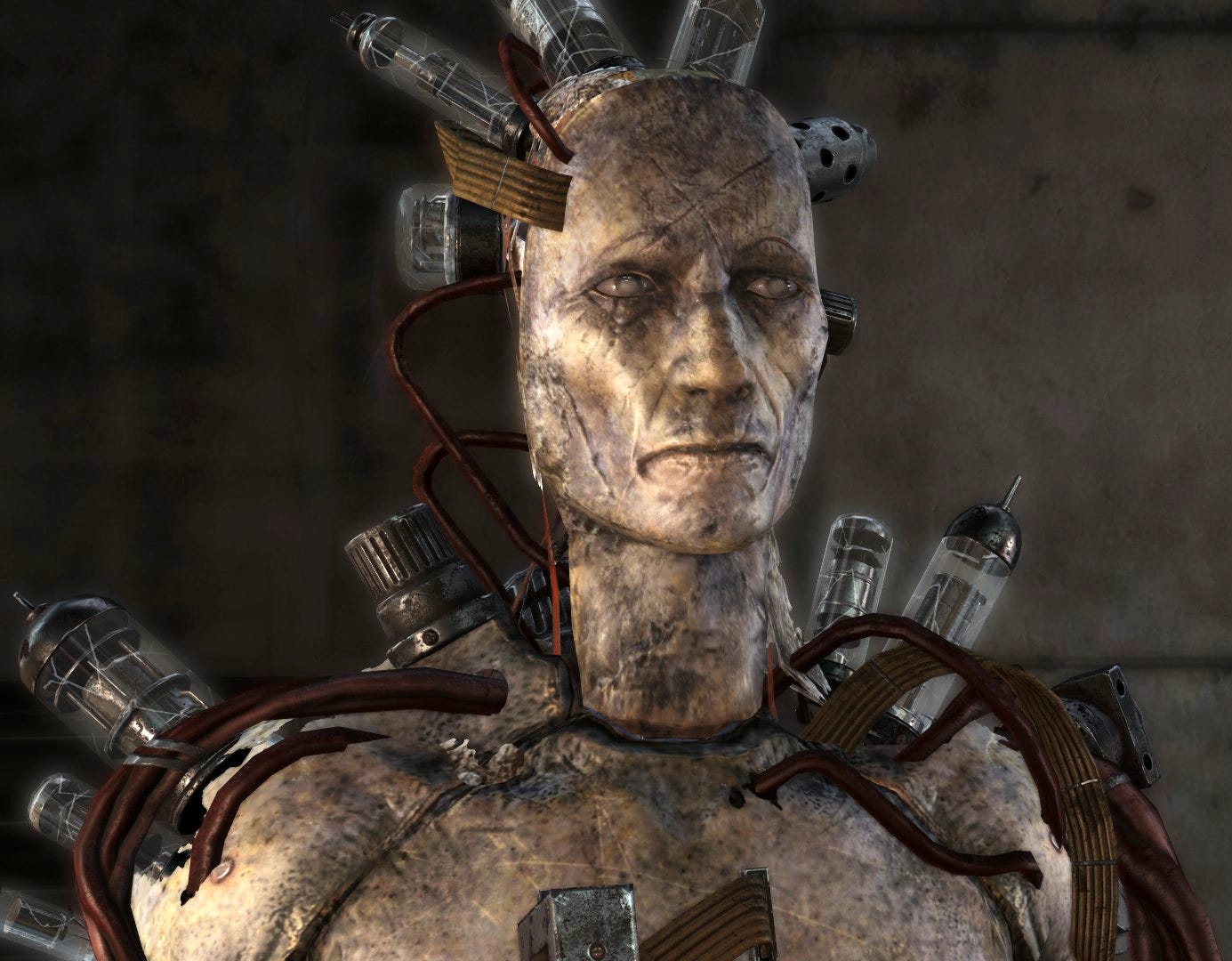
However, I think the most well written, and frankly impressive, piece of dialogue is what he says if you’re allied with the Railroad, and try to claim you “help” synths through wiping their memories and giving them new identities to help them hide from the Institute:
“I don’t understand why a group dedicated to helping synths would convince them, through fear, that their only option is to hide. Yes, they volunteer for the memory wipe. Yes, not knowing you’re a synth makes it harder for the Institute to find you. But the cost… I know how frightening it is, the risk of capture. But sacrificing what you are, avoiding the true struggle to be accepted as our own form of life…
This single piece of dialogue adds a level of moral complexity completely lacking in Fallout 4’s main storyline. If I had to guess, it seems the entire concept of the character was to take a more nuanced and detailed look at what the implications of synths, the Institute, and the other “good” factions’ actions entail— and whether they can even claim to be in the right, regardless of how “evil” the Institute is or was. Playing the Far Harbor DLC is almost frustrating because of this, because it shows that Fallout 4 had the potential to tackle these concepts, and simply didn’t for whatever reason.
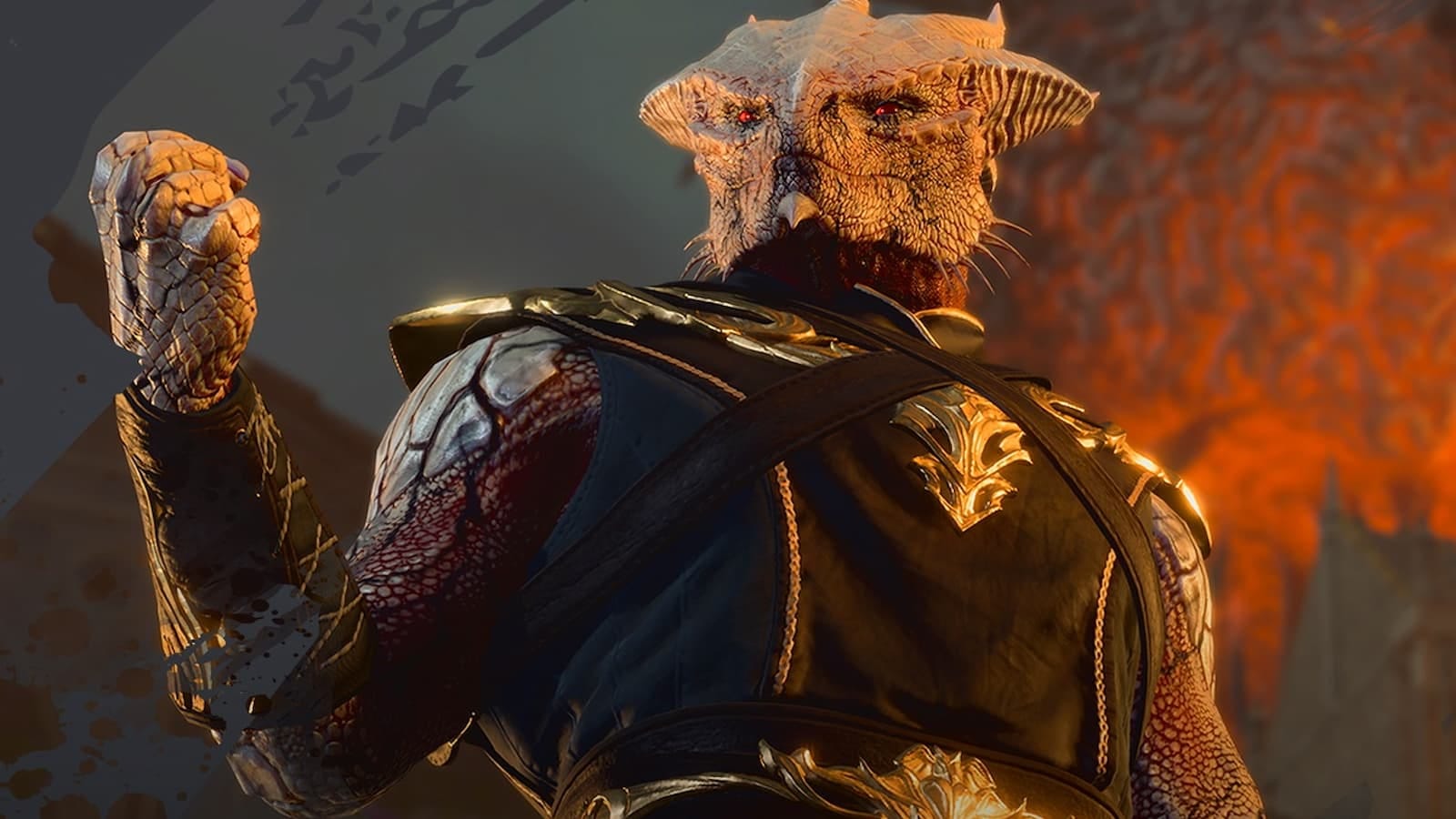
“Endings” are usually a driving factor in how good and evil play out in RPGs, with players often doing an “evil playthrough” after first doing a “good playthrough”. This division is so common and distinct, that Baldur’s Gate 3 is even releasing an update that adds distinct “evil” endings for all of the Origin characters.
As this simplistic division between good and evil rears its head in RPGs again and again, I’ve become more and more enamored with games where the choices are varying shades of gray— or at least more difficult to label black or white. Games like Disco Elysium, where there isn’t always a “good choice” to make, seem to me a much more engaging way to have the player be invested and think about their choices to a degree beyond what ending they get.
Moreover, I wish more games took the approach that Fallout 3 and New Vegas had in the narrated “slideshow” style of ending. It’s always great to see all the different interactions and choices laid out and compiled at the end of the game, even if it’s not as slick as a cinematic cutscene or an interactive epilogue. I’m perfectly fine with Ron Pearlman just reading out a list of the consequences of my character’s decisions.